

Cookware
12 ProductsAuthentic heavy-gauge brass and copper cookware with traditional Kalai tin lining.


Sort Products by
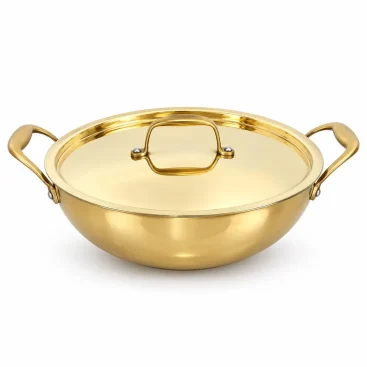
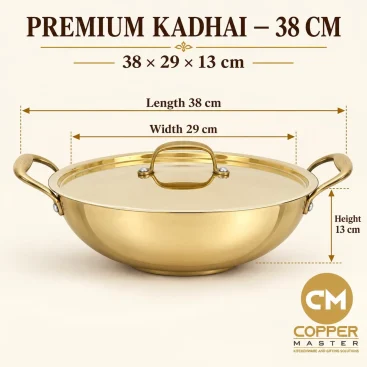
Pure Brass Cooking Kadhai with Lid & Kalai Tin Lining
Price range: ₹4,599 through ₹6,899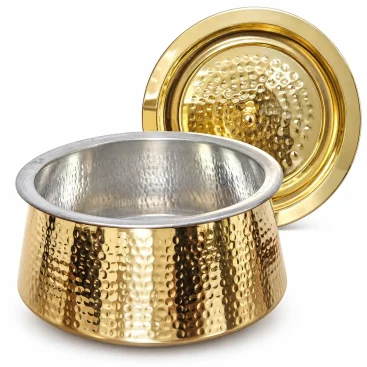
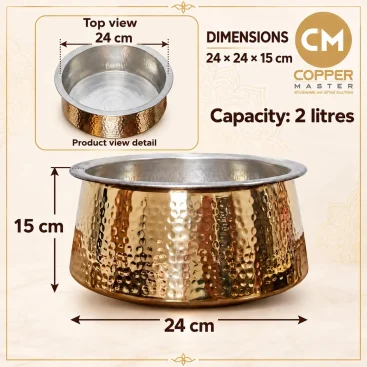
Authentic Pure Brass Biryani Handi with Lid & Kalai Tin Lining (2 Litres)
Original price was: ₹7,999.00.₹5,529.00Current price is: ₹5,529.00.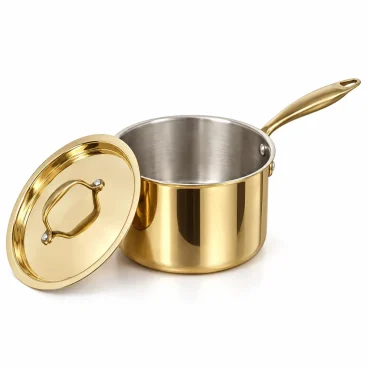
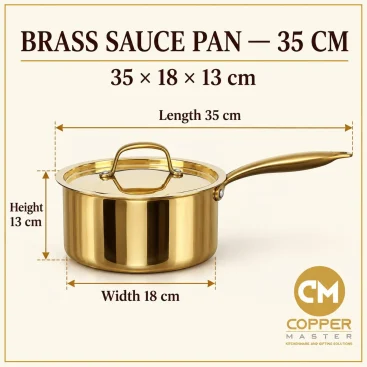
Handcrafted Pure Brass Saucepan with Lid & Kalai Tin Lining (1.5 Litres)
Original price was: ₹6,399.00.₹4,449.00Current price is: ₹4,449.00.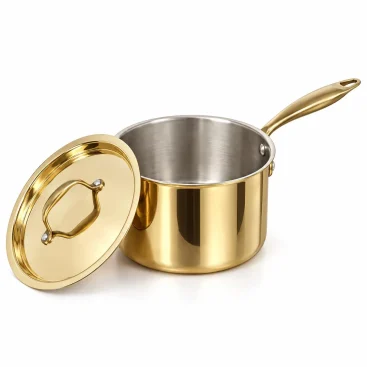
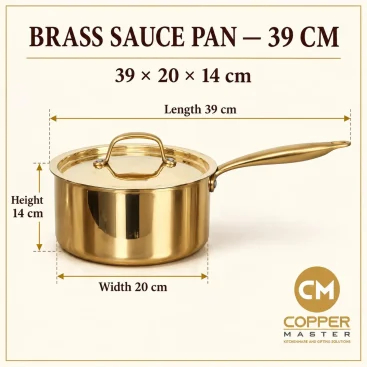
Handcrafted Pure Brass Saucepan with Lid & Kalai Tin Lining (2 Litres)
Original price was: ₹6,899.00.₹4,779.00Current price is: ₹4,779.00.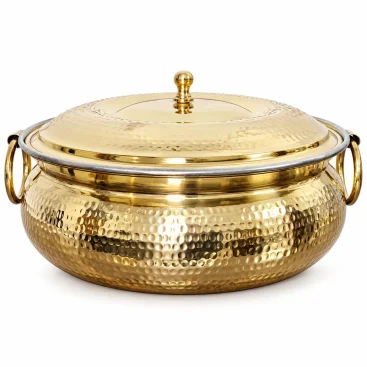
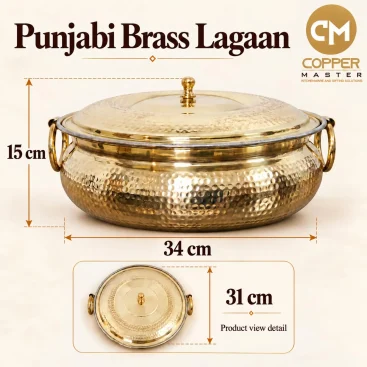
Traditional Punjabi Pure Brass Lagaan with Lid & Kalai Tin Lining (5 Litres)
Original price was: ₹11,999.00.₹8,329.00Current price is: ₹8,329.00.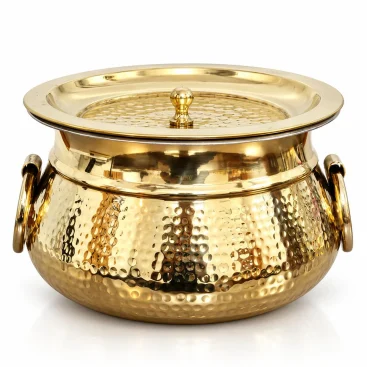
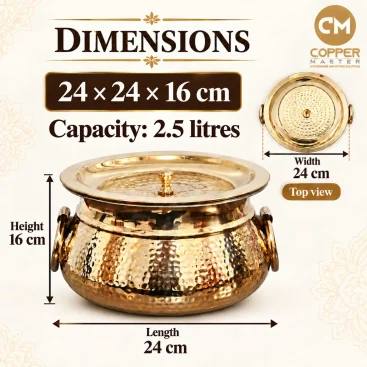
Traditional Punjabi Pure Brass Pateeli with Lid & Kalai Tin Lining (2.5 Litres)
Original price was: ₹7,999.00.₹5,529.00Current price is: ₹5,529.00.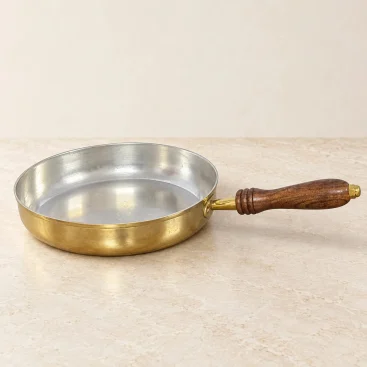
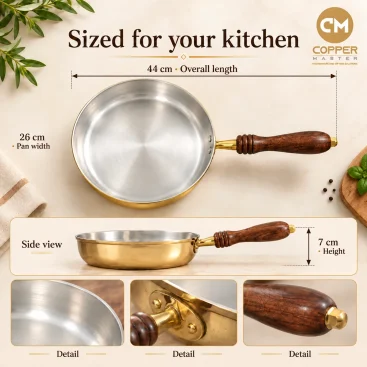
Premium Pure Brass Frying Pan with Kalai Tin Lining (1.5 Litre)
Original price was: ₹4,999.00.₹3,458.00Current price is: ₹3,458.00.
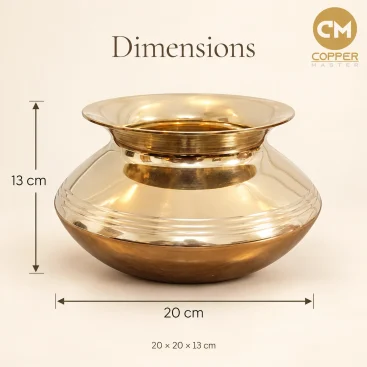
Heavy-Gauge Pure Kansa Punjabi Pateeli / Handi Pot (1.5 kg)
Original price was: ₹11,792.00.₹9,071.00Current price is: ₹9,071.00.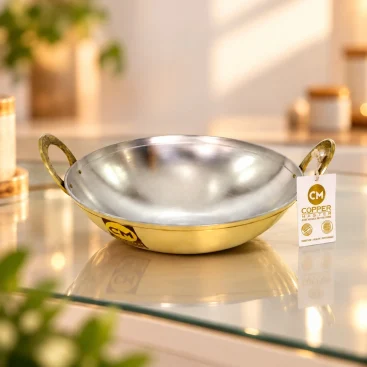
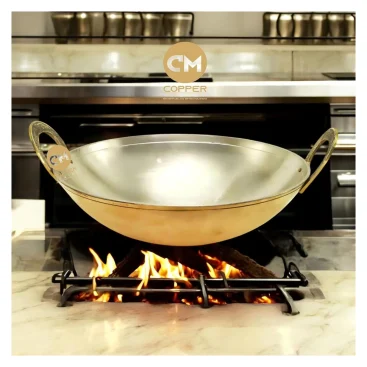
Pure Brass Cooking Kadhai with Kalai Tin Lining (2.5 Litre)
Original price was: ₹9,999.00.₹4,743.00Current price is: ₹4,743.00.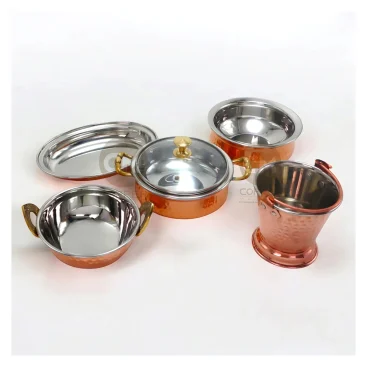
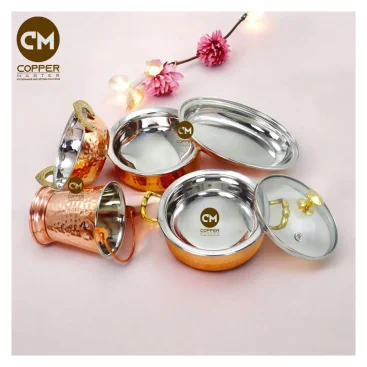
Royal Copper-Steel Serving Handi & Balti Set (Set of 5)
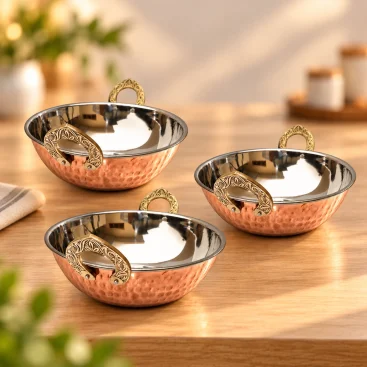
Traditional Copper-Steel Kadhai (Set of 3)
Original price was: ₹6,999.00.₹1,599.00Current price is: ₹1,599.00.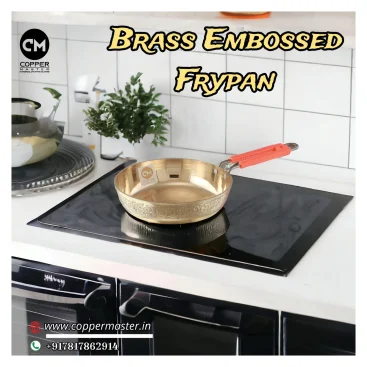
Pure Brass Frypan with Kalai Tin Lining (1 Litre)
Original price was: ₹2,499.00.₹1,981.00Current price is: ₹1,981.00.Brass & Copper Cookware — Buying & Selection Guide
Choose cookware for the meal you want to make, not just for the metal on the outside. Compare the cooking surface, lining, handle construction and supported heat sources before selecting a kadhai or pot.
Choose the right piece
Read the interior specification. Brass with tin lining and a stainless-steel interior need different care. Confirm gas, induction and oven suitability individually; one approval does not imply the others.
Check the details before ordering
Check usable capacity, rim diameter, depth and the weight you can handle safely when full. Confirm whether a lid is included and how the product should be heated and cleaned.
Care is part of the choice
Read the linked care guide before purchase, then follow the instructions supplied with your exact product. If a coating, lining or accessory is unclear, ask us for clarification. When comparing sets, make sure the selected option and its contents match your needs.
Frequently Asked Questions
Why does traditional brass and copper cookware require Kalai (tin lining)?
Traditional Kalai is pure food-grade tin that forms an inert barrier between food acids (tomatoes, tamarind, yogurt) and the metal, allowing safe cooking while benefiting from copper and brass's superior heat conductivity.
How often should Kalai tin lining be renewed?
With gentle cooking using wooden or silicone spoons, a traditional Kalai lining typically lasts 1 to 2 years under regular household use before needing a simple re-tinning.