

Kalai Tin-Lined Cookware Guide
The heritage art of food-safe tin lining for authentic copper and brass culinary vessels.
🍳 Culinary Food Safety
⚪ 100% Pure Silvery Kalai
🔥 Low-Medium Heat Mastery
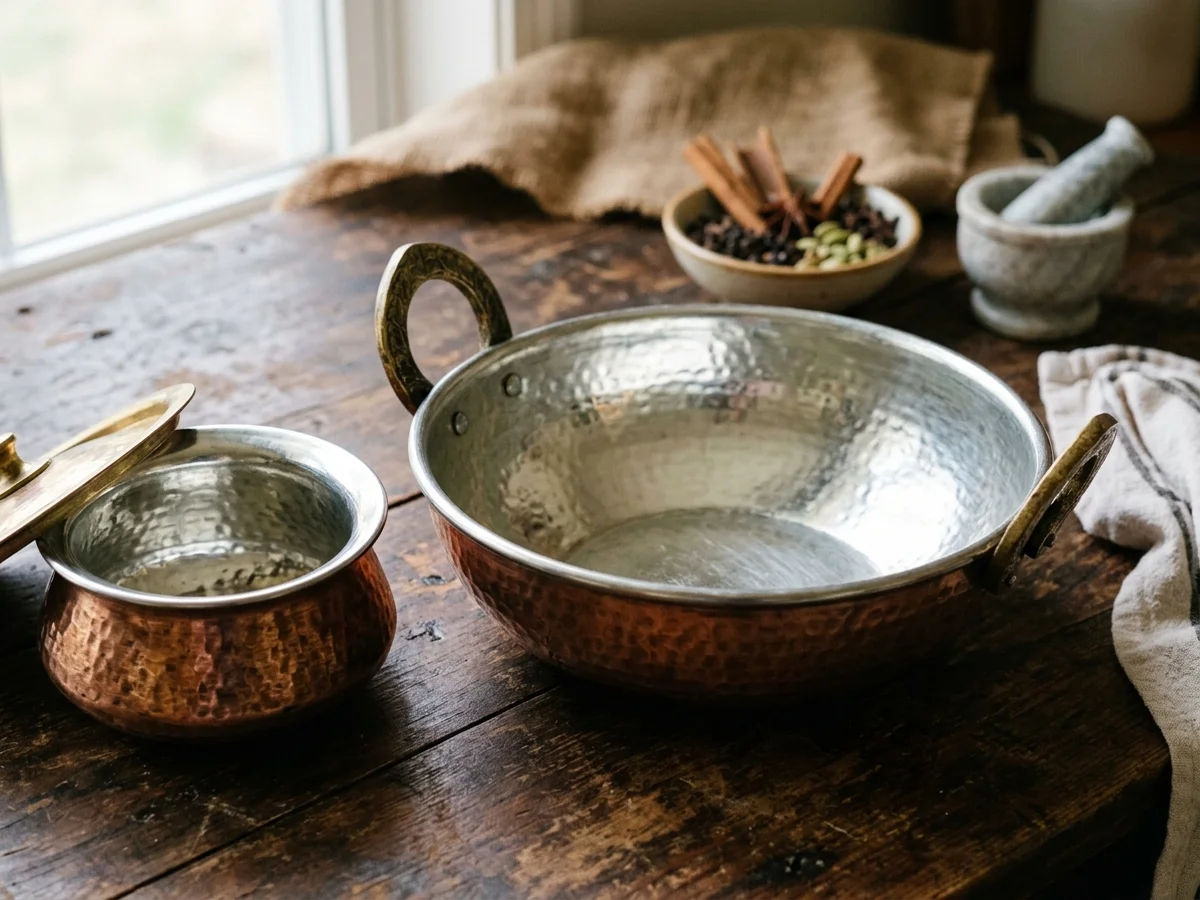
Why Traditional Cookware Uses Kalai (Tin Lining)
In classical Indian culinary science, cooking acidic ingredients like tomatoes, tamarind, curd, and citrus in unlined copper or brass is avoided because natural fruit acids react with bare metal. Kalai is the time-tested metallurgical craft where pure food-grade molten tin is hand-wiped onto the inner cooking surface, creating an inert, safe culinary shield.
Cooking Heat & Utensil Rules
- Low to Medium Heat Only: Pure tin melts at approximately 232°C (450°F). Copper and brass distribute heat with extraordinary speed, so high flames are never needed. Never heat an empty Kalai pan on high flame.
- Wooden & Silicone Ladles: Use wooden spatulas or soft silicone spoons. Sharp steel ladles can scratch the soft tin lining over time.
- Gentle Washing: Clean with warm water, gentle soap, and a soft sponge. Never use steel scouring pads on the silvery lining.
When & How to Re-Tin (Kalai)
With regular everyday cooking, the silvery tin lining gradually thins over 1 to 2 years. When you begin to see the underlying golden brass or reddish copper base showing through on the cooking surface, it is time to have the vessel freshly re-tinned by a traditional artisan (Kalaiwala).
Kalai Cookware: Do's & Don'ts
✓ DO
Cooking Best Practices
- Add Oil/Water First: Always put ghee, oil, or liquids into the pan before turning on the flame.
- Low to Medium Flame: Leverage copper's rapid thermal conductivity on gentle heat.
- Soft Sponge Wash: Wash gently with mild dish liquid and a soft sponge.
✕ NEVER
Strict Precautions
- No Dry High Heat: Never leave an empty tin-lined vessel on a high burning flame.
- No Steel Scrubbers: Never scrub the inner tin layer with metal wire pads.
- No Sharp Cutlery: Avoid metal forks and sharp knives on the lining.