

Care & Cleaning Centre
Simple, natural rituals to preserve the warmth, purity, and golden luster of your handcrafted metalware for generations.
Choose Your Metal for an Instant Routine
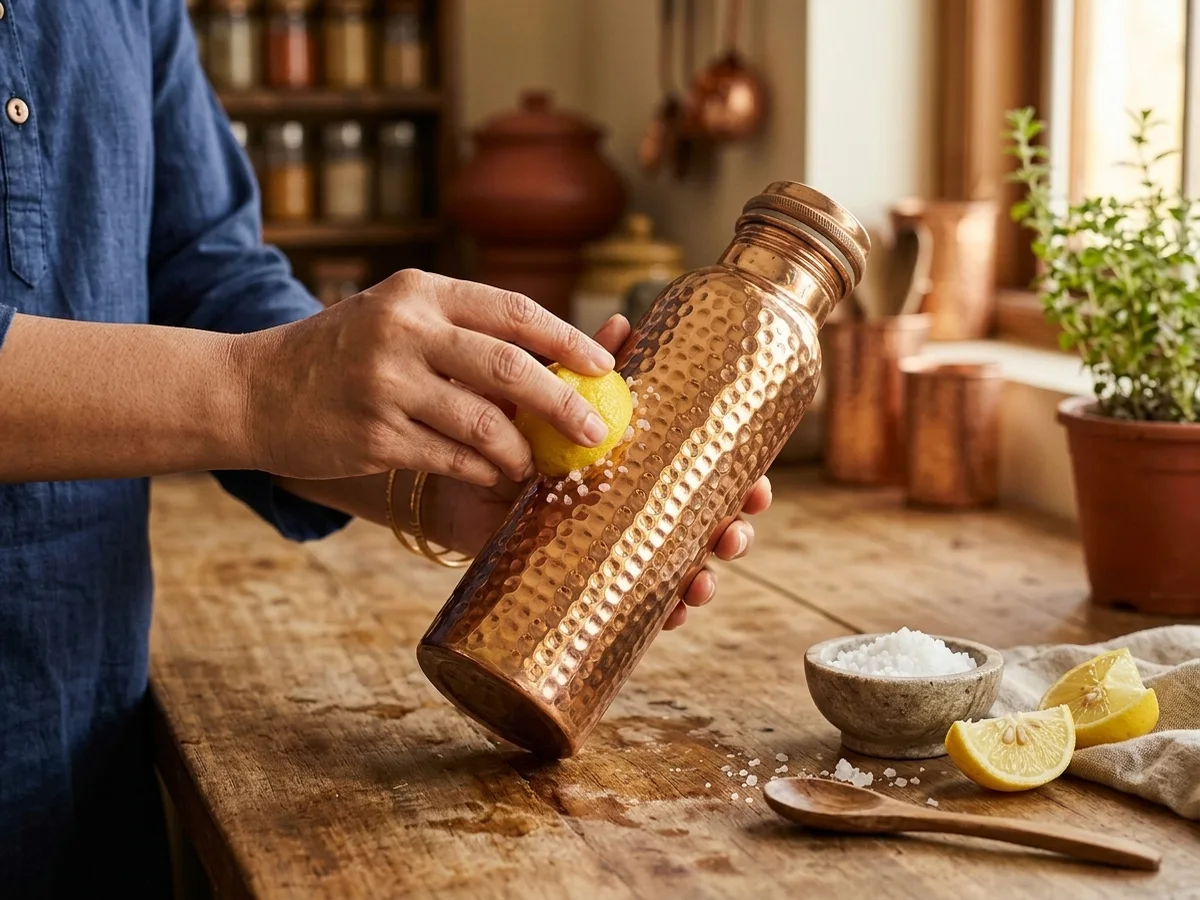
Pure Copper Routine
Gently rub a sliced lemon half sprinkled with fine rock salt over the surface. Rinse with clean water and immediately wipe bone-dry with a microfiber cloth to prevent water spots.
View Full Bottle Cleaning Guide →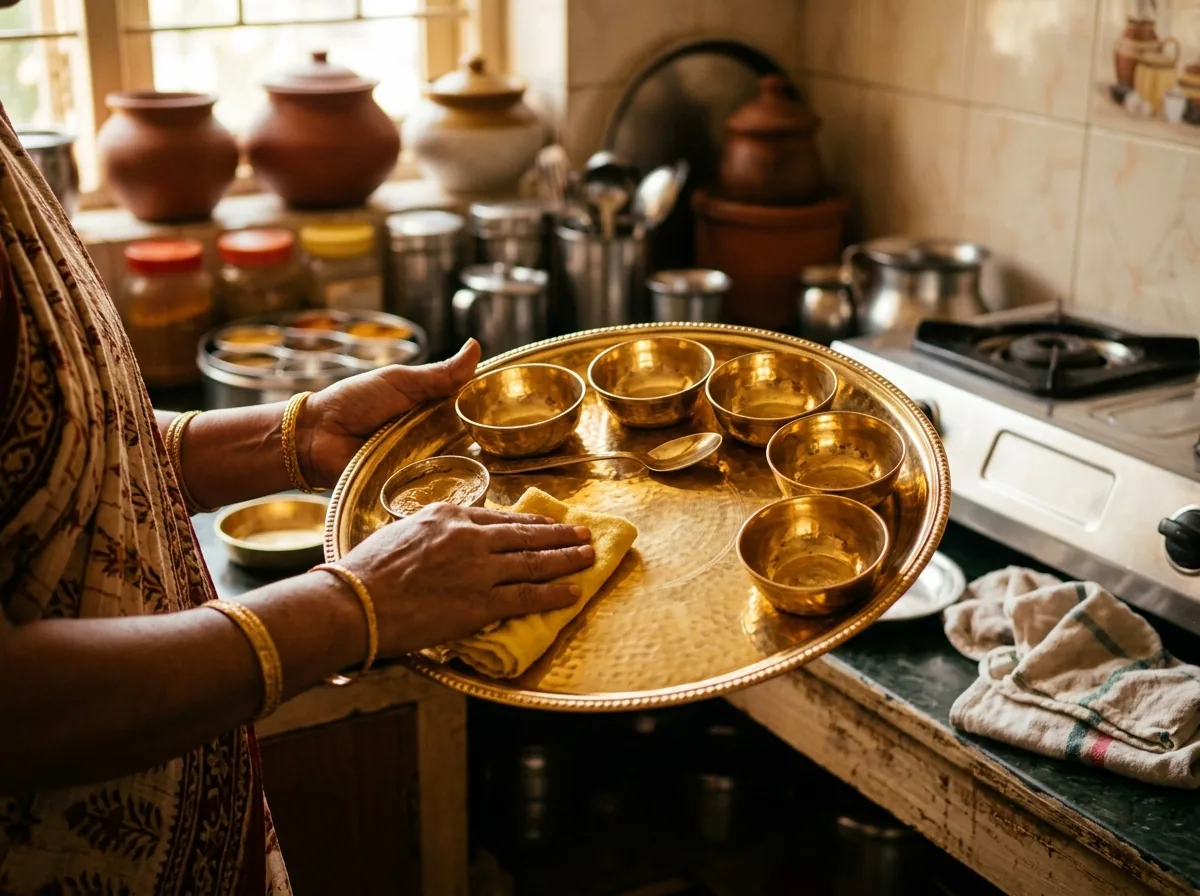
Traditional Brass Care
Wash daily with mild dish soap and a soft sponge. To restore a royal golden shine, use a pinch of Pitambari paste or tamarind pulp with a soft cotton cloth.
View Brass Utensils Guide →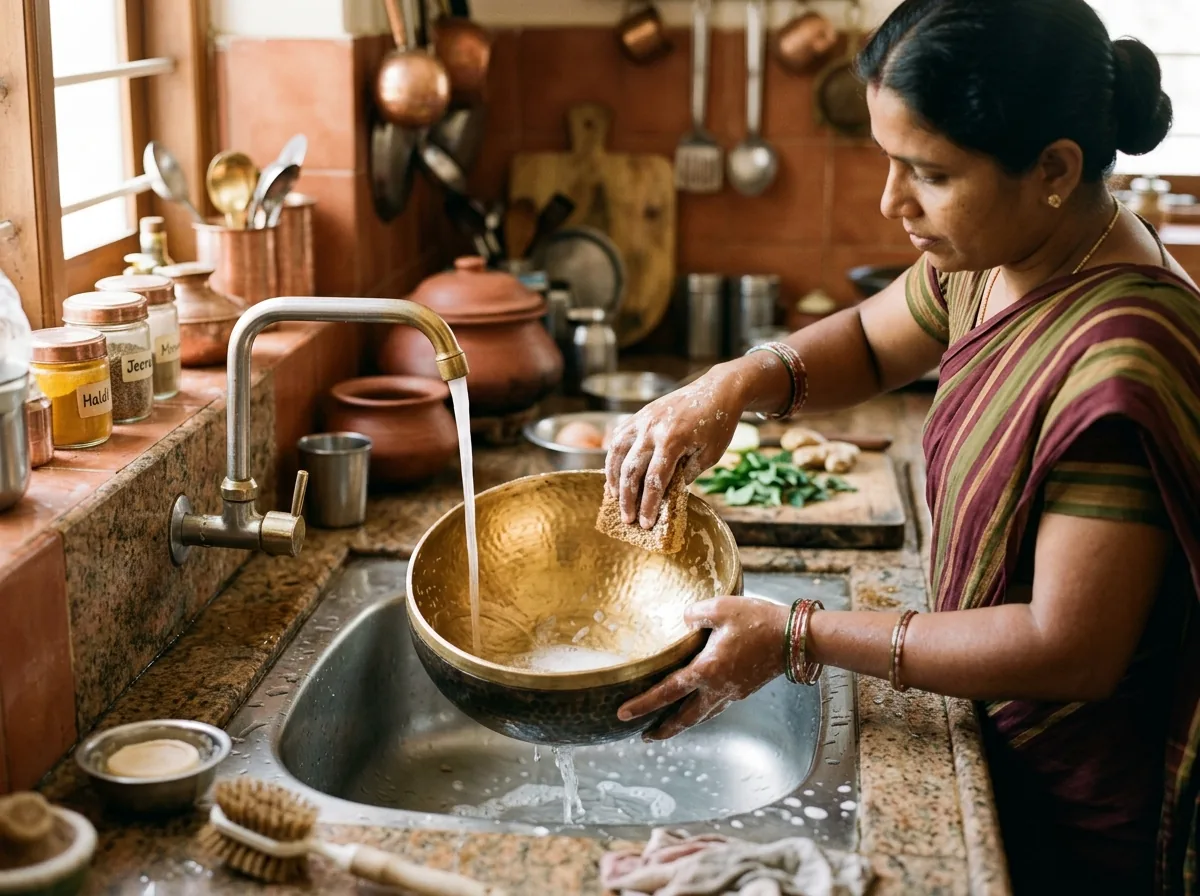
Handcrafted Kansa (Bronze)
Wash with natural liquid soap and a non-scratch foam pad. Avoid leaving raw citrus juices directly in contact with Kansa. Buff dry with a soft cloth.
View Kansa Bronze Guide →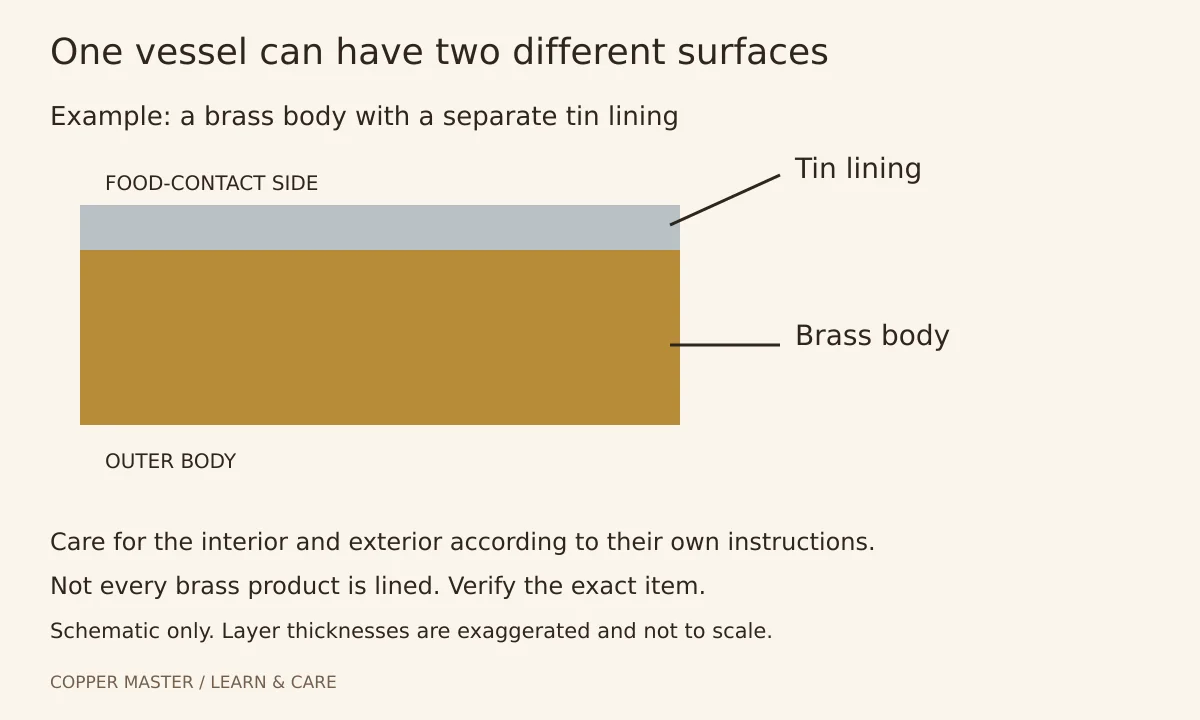
Tin-Lined Cookware (Kalai)
Protect the silvery food-grade tin lining by using soft sponges and wooden or silicone ladles. Re-tin (Kalai) when the copper base starts showing through.
View Kalai Cookware Guide →Care Guides by Vessel & Craft
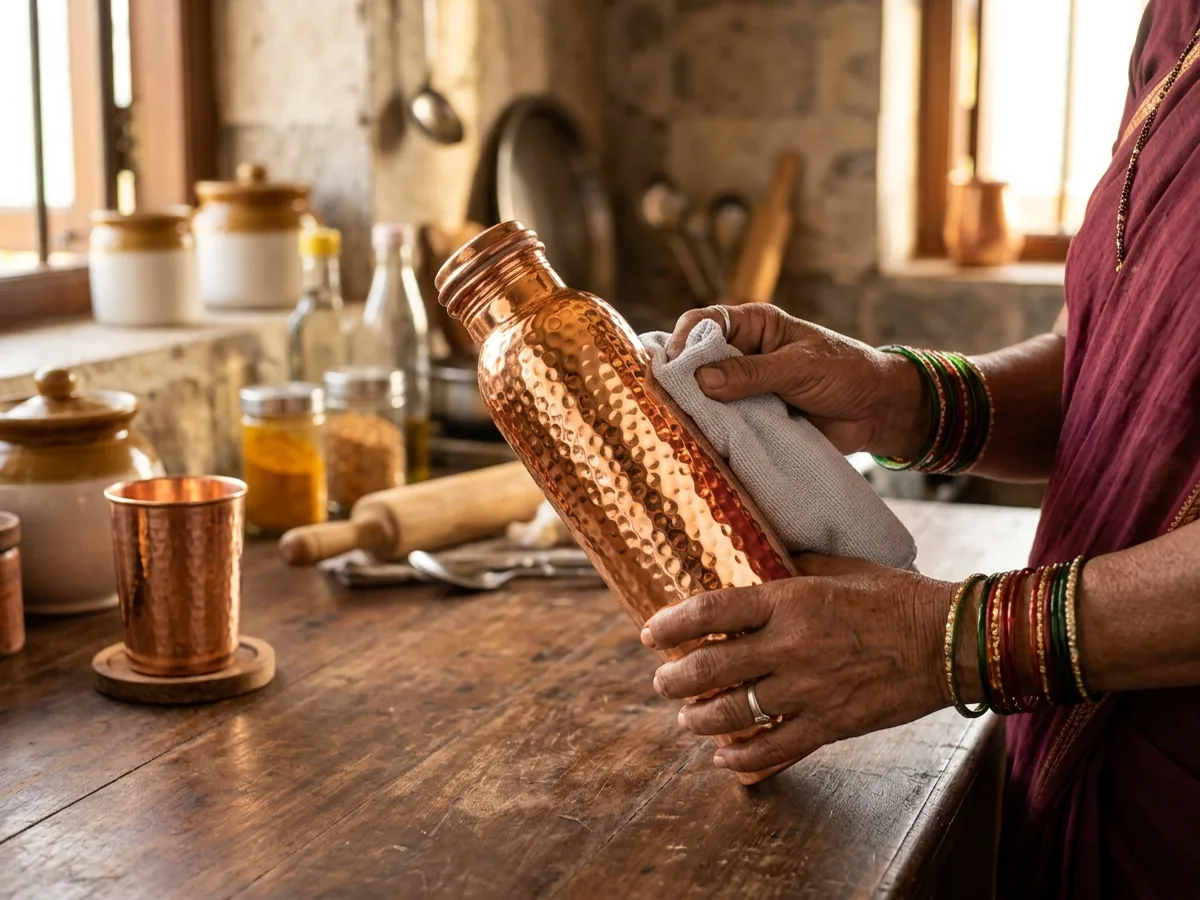 Bottles & Drinkware
How to Clean a Copper Bottle
3-minute lemon-salt exterior wash, narrow-neck interior detox routine, and thread maintenance.
Read Step-by-Step Guide →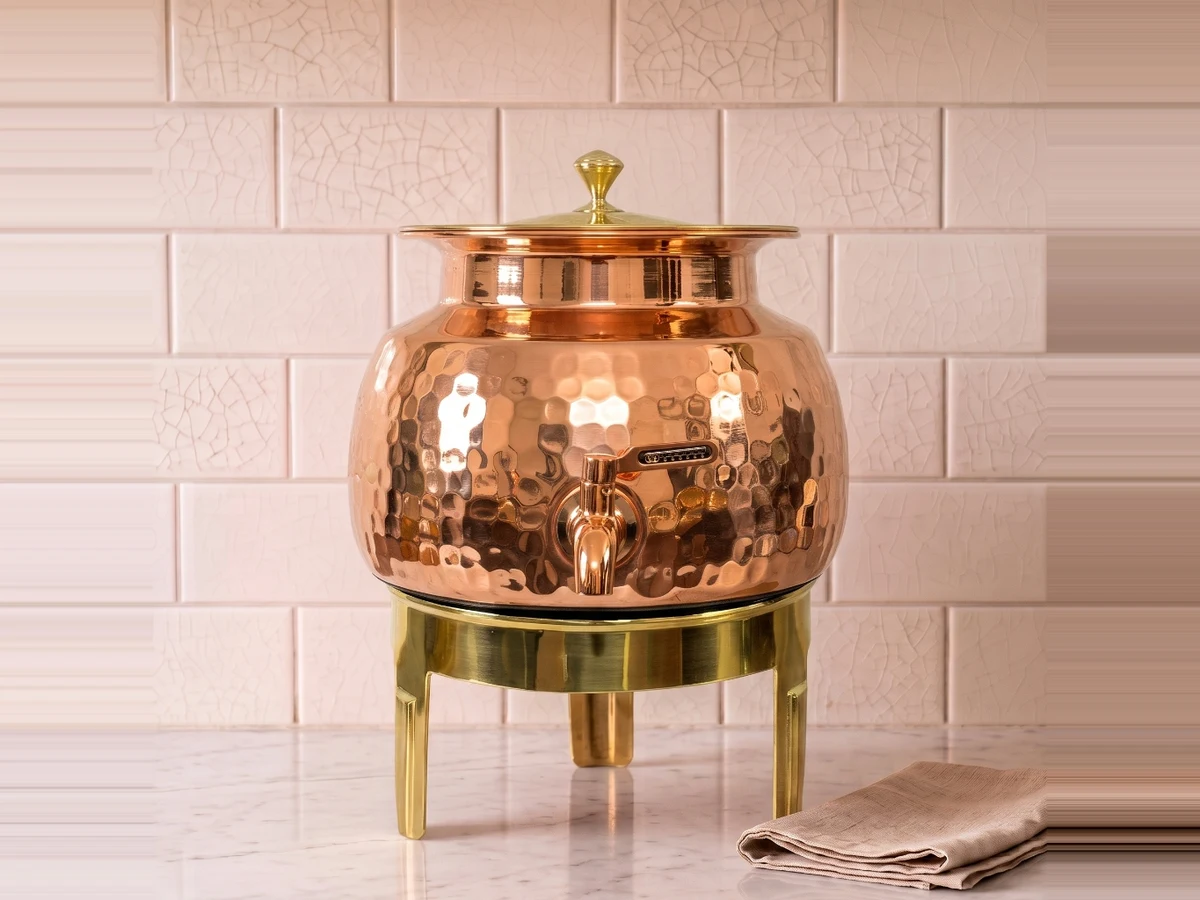 Dispensers & Matkas
Water Dispenser & Tap Care
Tank cleaning rituals, brass tap flushing, silicone seal preservation, and post-assembly leak checks.
Read Dispenser Guide →
Brass Utensils
Caring for Brass Dinnerware
Maintaining warm golden luster, safe dining practices, and balancing natural heritage patina.
Read Brass Guide →
Kansa Dining
How to Care for Kansa Bronze
Ayurvedic bell-metal dining hygiene, gentle non-abrasive washing, and maintaining ringing resonance.
Read Kansa Guide →
Cookware & Kalai
Kalai Tin-Lined Cookware
Preserving traditional tin linings, gentle low-medium cooking heat, and knowing when to re-tin.
Read Kalai Guide →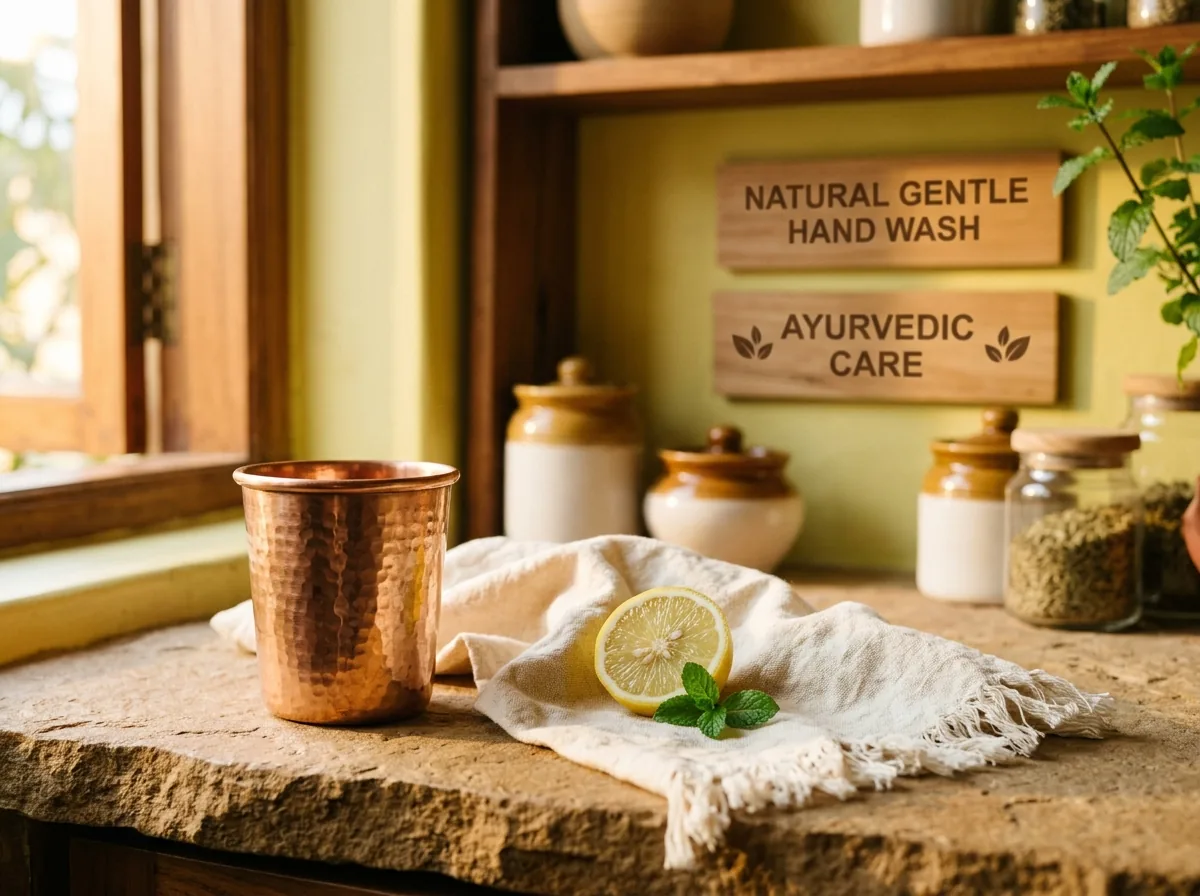 Storage & First Use
First Use, Drying & Storage
Unboxing inspection, initial hygiene rinse, bone-dry moisture control, and seasonal storage habits.
Read Storage Guide →Universal Care Rules: Do's & Don'ts
Best Practices
- Natural Restorers: Use lemon + fine salt, tamarind, or Pitambari powder for gentle oxidation removal.
- Bone-Dry Wipe: Immediately dry vessels with a soft cotton or microfiber cloth to eliminate water marks.
- Lid-Off Airing: Always leave caps and dispenser lids off until the inside is 100% dry.
- Gentle Tools: Use soft sponges, microfiber cloths, and soft nylon bottle brushes only.
Avoid at All Times
- No Dishwashers: Harsh detergents, heat cycles, and steam will strip linings, damage seals, and ruin finishes.
- No Steel Wool: Wire scrubbers cause irreversible scratching and strip protective lacquer or tin linings.
- No Acidic Liquids: Never store lemon juice, vinegar, soda, or milk in unlined copper or brass vessels.
- No Wet Storage: Never pack metalware into closed cabinets while still damp or moist.
Frequently Asked Questions
Can I use the same cleaning routine on all Copper Master products?
No. Plain unlined copper and brass welcome lemon-salt or Pitambari polishing. However, lacquered exteriors, painted finishes, and tin linings (Kalai) should only be washed with mild soap and water to prevent damage.
Is dark patina on copper a defect?
Not at all. Pure copper naturally oxidizes when exposed to air and moisture, deepening into an antique brown patina. This natural oxidation is proof of 100% pure untreated copper and restores instantly with lemon and salt.
How often should I clean my copper water vessel?
Rinse the interior with fresh water daily. A quick 3-minute lemon-salt or Pitambari restoration every 1 to 2 weeks will keep the exterior gleaming and the interior clean.