
Brass Diyas & Oil Lamps
1 ProductHandcrafted pure brass Aarti diyas and oil lamps for mandir worship.

Sort Products by
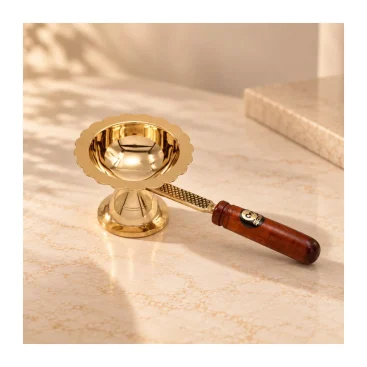
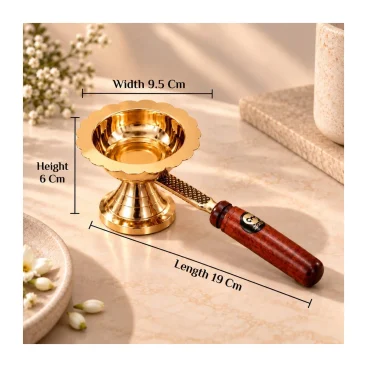
Pure Brass Aarti Diya with Wooden Handle for Pooja & Mandir
Price range: ₹689 through ₹3,289Brass Pooja Items — Buying & Selection Guide
Choose pooja pieces to suit the space and rituals of your home. Compare diya, kalash and thali dimensions and read exactly what is included in each listing.
Choose the right piece
Measure the mandir shelf and leave adequate space around items used with a flame. Place burning lamps only on stable, suitable surfaces away from flammable materials, children and pets. Never leave a flame unattended.
Check the details before ordering
For a gift, check the complete set and packaging separately. A decorative or ritual item is not automatically suitable for food storage. Follow the stated intended use and care method.
Care is part of the choice
Read the linked care guide before purchase, then follow the instructions supplied with your exact product. If a coating, lining or accessory is unclear, ask us for clarification. When comparing sets, make sure the selected option and its contents match your needs.
Frequently Asked Questions
Why is pure brass traditionally used for Hindu pooja articles and diyas?
According to Vedic traditions, brass (Pital) attracts and transmits positive divine vibrations (Satvik energy) while offering high heat resistance for burning camphor, oil, and ghee wicks.
How do I clean brass pooja thalis and diyas after oil and kumkum use?
Soak in warm water with mild dish soap to remove oil residue, then rub with a paste of Pitambari powder or lemon and salt to restore a brilliant golden temple shine.